The Essential Guide to Residential Fire Risk Assessments
Managing a residential property comes with a strict legal duty: protecting the people who call it home. Whether you manage a block of flats, a sheltered housing scheme, or a House in Multiple Occupation (HMO), a Residential Fire Risk Assessment (FRA) is your primary tool for ensuring safety and maintaining legal compliance.
Under the Regulatory Reform (Fire Safety) Order 2005 and the Fire Safety Act 2021, landlords and block managers are legally required to assess and manage fire risks in the communal areas of residential buildings. This guide explains what is required to keep your building legal and your tenants safe.
What is a Residential Fire Risk Assessment?
A residential fire risk assessment is a detailed inspection of the shared parts of a domestic building. It evaluates potential fire hazards, identifies escape routes, and examines the safety measures in place to prevent or contain a fire.
For multi-occupied buildings, this assessment must cover structural elements that affect the common areas, including:
- Communal hallways, stairwells, and entrance lobbies.
- Plant rooms, bin stores, and shared utility spaces.
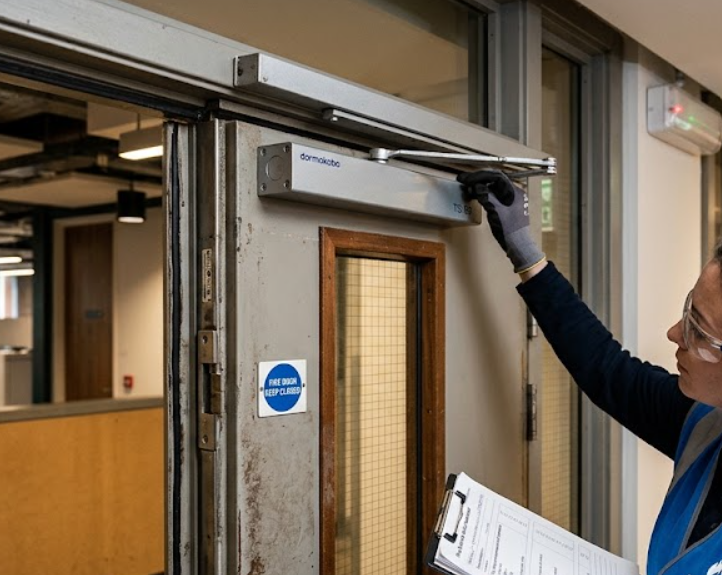
- Flat entrance doors (which must act as effective fire doors).
- External walls, cladding, and attached balconies.
The Core Areas of a Residential Inspection
A professional assessor evaluates several critical safety layers during a residential survey:
1. Fire Compartmentation
Residential blocks rely on a “stay put” or managed evacuation policy, which only works if walls, floors, and fire doors can contain a fire within its room of origin. We check the structural barriers to ensure smoke and flames cannot bypass shared spaces.
2. Escape Routes & Signage
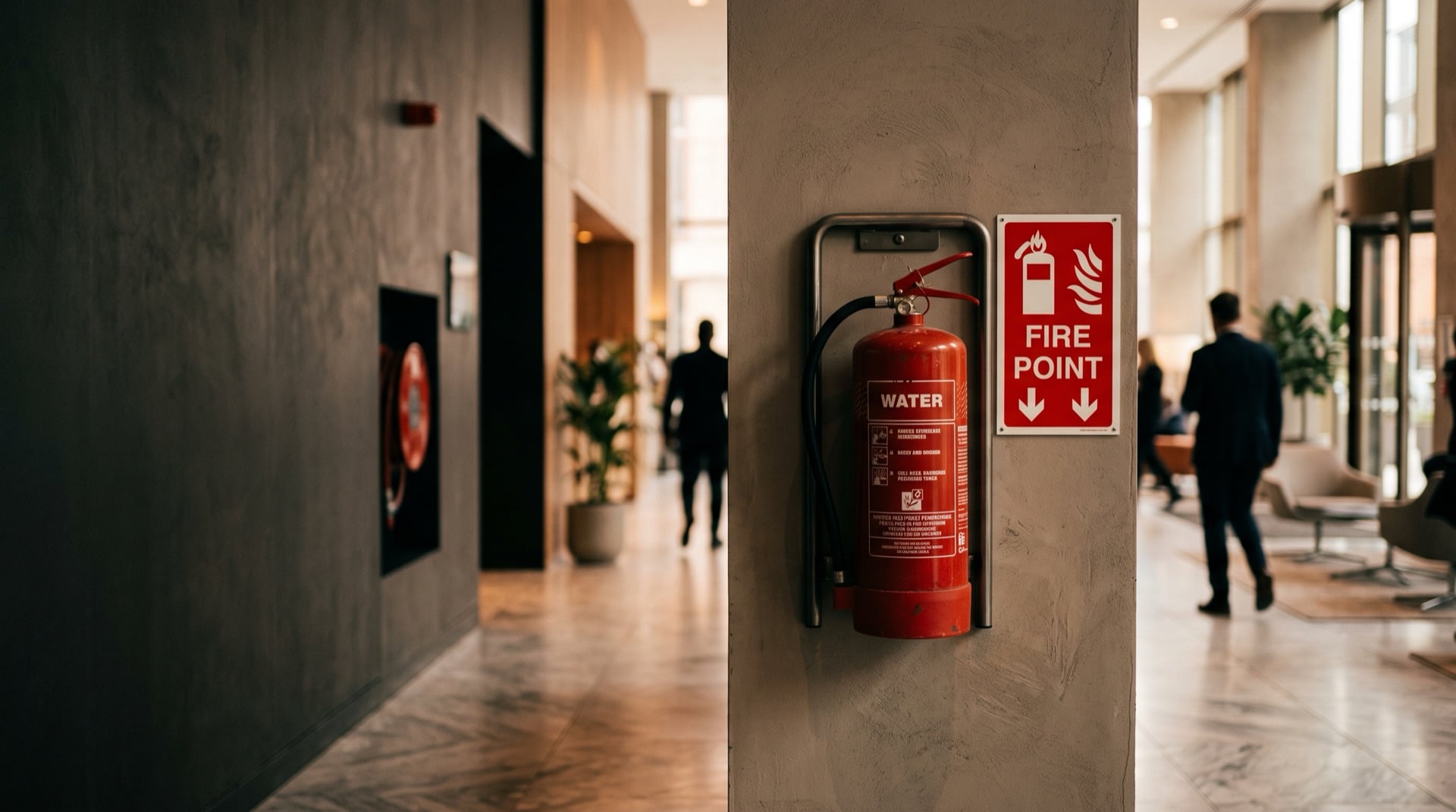
Corridors and staircases must remain entirely free of combustible materials and obstructions. We inspect emergency lighting systems and ensure clear, unambiguous fire safety signage guides residents to safety in darkness.
3. Detection & Warning Systems
We verify that communal smoke alarms, heat detectors, and interlinked warning systems are operational, correctly positioned, and adequately maintained to alert residents instantly.
Why Landlords and Block Managers Must Use Professionals
While a basic commercial property might seem straightforward, residential properties carry higher human risk. People sleep in these buildings, meaning response times during an emergency are slower.Failing to hold a valid, up-to-date assessment leaves you exposed to severe local authority fines, prosecution, and can completely invalidate your buildings insurance. A professional assessment provides the legally defensible documentation you need to prove your building is managed safely.
Secure Your Residential Property
Do not leave tenant safety or your legal compliance to chance. Book a certified assessment with our specialist residential team today.
Call us directly: 0117 46 26 066
Email our team: enquiries@firesafety-compliance.co.uk
Providing accredited residential safety assessments across the UK.