Fire Risk Assessment for Care Homes
Fire Risk Assessment for Care Homes: A Practical Guide
Fire safety in care homes is uniquely complex. Residents are often among the most vulnerable in society. Many face mobility challenges, cognitive impairments, or complex medical needs that make evacuation more difficult. For this reason, a fire risk assessment for care homes must go beyond basic compliance. It must be thorough, tailored, and centred entirely on protecting life.
At Fire Safety & Compliance, we support care providers with clear guidance to help maintain safe environments. This guide outlines the essential factors you need to consider.
Protect Lives and Property
Legal Compliance
Peace of Mind
Prevent Financial Loss
Why Fire Risk Assessments are Critical in Care Settings
Care homes present a higher level of fire risk due to several factors. These include residents who require significant assistance and the constant use of medical equipment. Furthermore, care homes often have a high fire loading due to furniture, bedding, and oxygen supplies.
Under the Regulatory Reform (Fire Safety) Order 2005, the Responsible Person must ensure a sufficient fire risk assessment is in place. In a care setting, this is not just a legal requirement. It is a fundamental part of safeguarding vulnerable lives.
What Makes Care Home Fire Risk Assessments Different?
A compliant assessment must consider the specific human element of the building. Unlike a standard office, a care home requires a person-centred approach.
- Resident Vulnerability and Autonomy Each resident has different needs. Your assessment must account for mobility limitations and conditions such as dementia. A significant challenge involves residents who value their independence but become anxious or disoriented during alarms. In these cases, staff must balance respecting autonomy with providing calm, discreet physical guidance. This ensures a safe evacuation without causing unnecessary distress.
- Staffing Levels and Night-Shift Realities Staff are critical in an emergency. However, the greatest difficulty in a Progressive Horizontal Evacuation (PHE) is often the lack of available personnel, particularly at night. The assessment must evaluate whether your current staffing levels can realistically move mobile but mentally impaired residents to safety during a crisis.
- Hidden Fire Risks in Bedrooms While kitchens and laundries are obvious hazards, “invisible” risks often exist in private rooms. A common issue we find is residents using their own old, non-PAT tested heaters. These devices are frequently brought in from home and can pose a severe fire risk if they are faulty or placed near bedding.
Posted on GoogleTrustindex verifies that the original source of the review is Google. Liam at Fire Safety & Compliance has carried out two Fire Risk Assessments for me, one for a commercial property and one for a holiday let. I found him to prompt, conscientious and pragmatic, and very friendly/easy to deal with. In particular, I valued his intelligent approach in relation to our listed building, which enabled us to find appropriate solutions that met the regulations without causing more detriment than necessary to the historic fabric of the building. I would definitely recommend him and use him again.Posted on GoogleTrustindex verifies that the original source of the review is Google. Great thanks place for advice and help with all issues with fire alarms and safetyPosted on GoogleTrustindex verifies that the original source of the review is Google. Highly recommend Liam and his team such a detailed report outlining everything in great detail giving us lots of guidance. Well worth the money and for peace of mind now knowing everything we need to be compliant. Running a small business doesn’t come with a handbook so sometimes getting in the experts in is worth every pennyPosted on GoogleTrustindex verifies that the original source of the review is Google. Liam is an expert in his field, what he doesn’t know isn’t worth knowing! From initial enquiry to completion Liam was prompt, professional, friendly and explained everything along the way. Such a refreshing change to deal with such a professional and knowledgeable expert. I would recommend Liam to any business or Landlord without question. You will be in safe hands. Thanks again Liam.Posted on GoogleTrustindex verifies that the original source of the review is Google. To date this company has provided an excellent all round service.Our contact is ongoing as there are matters that need addressing. I initially spoke to Liam on the telephone. He was able to answer all of the questions I raised clearly and professionally with references to relevant legislation. The contract and pre site visit collection of information was professional and thorough. Communication was clear throughout. His time keeping was faultless. Reports were provided within the promised time frames and were clear and informative. Liam was able to provide reassurance and guidance and recommendations for the remedial work required in respect of our Grade 2 listed building. Explaining at the same time the different standards that applied depending on the proposed use of the building. In addition on request he was able to offer a comprehensive package of site specific fire notices , maintenance logs and procedures. Highly recommended for clarity and knowledge.Posted on GoogleTrustindex verifies that the original source of the review is Google. Liam was very professional, thorough and helpful at every stage - with advance communications, the fire risk assessment itself and follow-up advice and guidance. I can highly recommend.Posted on GoogleTrustindex verifies that the original source of the review is Google. Liam was amazing. We needed a fire risk assessment in order to complete on our flat. He came out within a couple of days, and the assessment was emailed within 2 weeks. Outstanding!!!!Posted on GoogleTrustindex verifies that the original source of the review is Google. Liam’s attention to detail was incredible while visiting the property. So easy to talk to and answer questions, explaining in full detail why fire doors required upgrading, etc. The fire risk assessment itself was incredibly detailed with recommendations clearly explained. I have rung him since the visit on several occasions and he patiently answers all my questions. If you need a fire risk assessment or anything to do with fire safety, Liam is definitely your man. 5 stars from mePosted on GoogleTrustindex verifies that the original source of the review is Google. I am writing this behalf of the Charity I work for. They have been the best company and provided us the report quickly which we wanted for the completion. Professional, very informative, very friendly and accessible company. They agreed to provide us ongoing advice where necessary too. Highly recommend this company.Posted on GoogleTrustindex verifies that the original source of the review is Google. Great Company, good service, very efficient, good value for money and friendly. Will be using them again.
Key Areas Covered in our Assessments
A comprehensive fire risk assessment for a care home should include:
- Fire Detection and Warning Systems: We ensure audible and visual alerts are appropriate for those with sensory impairments.
- Means of Escape: We verify that escape routes are clear and accessible for wheelchairs and beds.
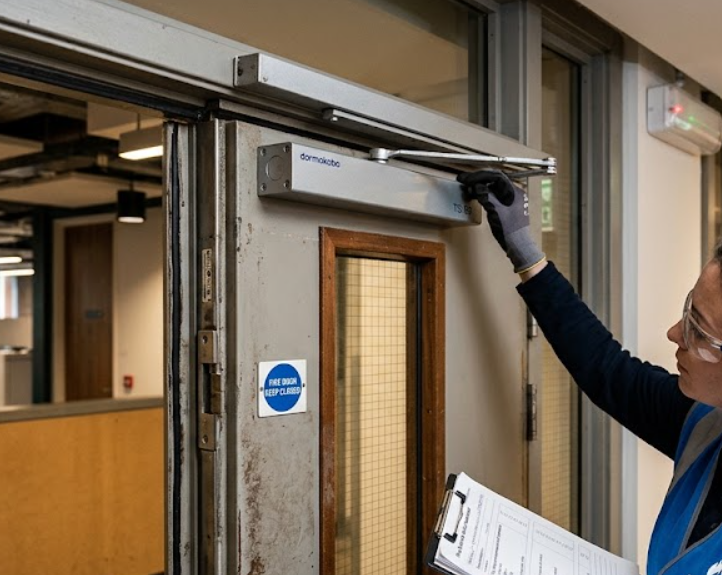
- Compartmentation: We check that fire-resisting doors and walls are capable of supporting a Progressive Horizontal Evacuation.
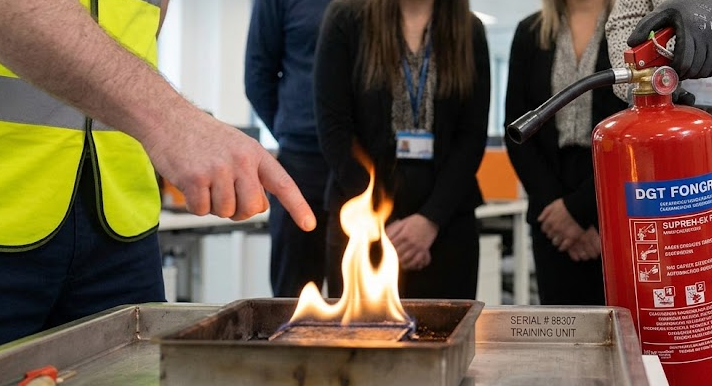
- Staff Training: We evaluate whether your team is prepared for the practical realities of a person-centred evacuation.
Serving the Southwest
With a proven track record of excellence and client satisfaction, we have established ourselves as a trusted name in the Southwest community. Businesses in the Southwest rely on our expertise, professionalism, and commitment to quality when it comes to fire risk assessments and safety solutions.
- Bristol
- Bath
- Cirencester
- Cheltenham
- Gloucestershire
- South Gloucestershire
- Somerset
- Devon
- Dorset
- Wiltshire
- South Wales
- Monmouthshire
How Fire Safety & Compliance Can Help
At Fire Safety & Compliance, we understand the unique pressures faced by care providers. Our assessments are conducted by experienced professionals who specialise in vulnerable environments. We provide clear, jargon-free reports supported by practical recommendations. We do not just identify risks. We help you manage them effectively to protect those who depend on you.
Contact Our Team for an Expert Care Home Fire Risk Assessment
Latest News & Insights
Providing Clarity to the Complexity: Stay informed with our insightful blogs of all things fire safety related.